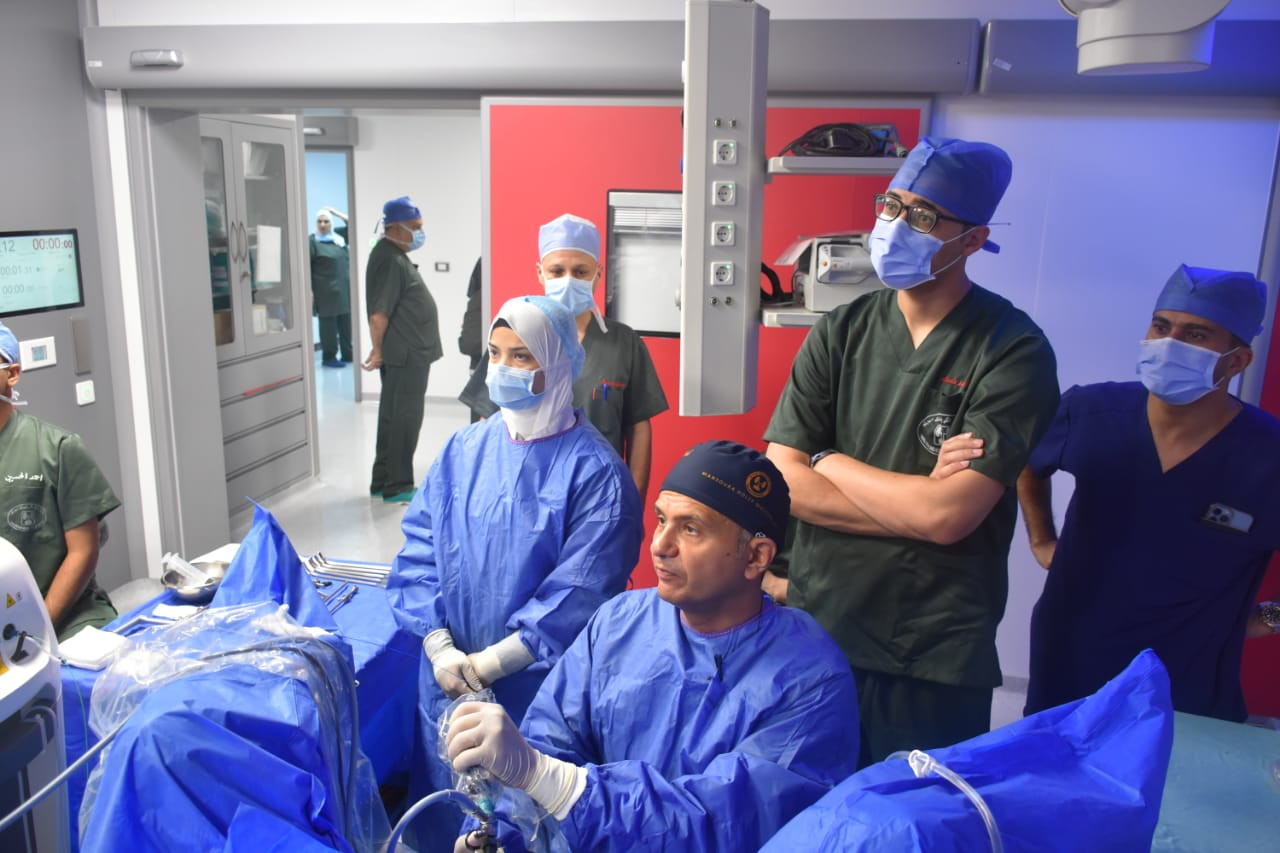
AEEP Endourology Surgery Masterclass is a comprehensive, high-level educational program designed to advance the knowledge and practical skills of urologists and surgical trainees in the rapidly evolving field of endourology. This masterclass focuses on precision-driven, minimally invasive techniques that represent the gold standard in modern urological surgery.

Led by experienced experts and key opinion leaders, the program delivers a balanced blend of evidence-based theory and real-world clinical practice. Participants will gain in-depth exposure to the latest endourological procedures, including stone management, flexible and rigid endoscopy, laser technologies, and advanced surgical decision-making. Emphasis is placed on improving operative efficiency, patient safety, and clinical outcomes through structured learning and hands-on insights.

The masterclass is designed to bridge the gap between traditional training and cutting-edge surgical innovation. Through case discussions, step-by-step procedural breakdowns, and expert tips, attendees will enhance their technical confidence and refine their approach to complex endourological cases.

Whether you are seeking to strengthen foundational skills or stay at the forefront of minimally invasive urological surgery, the AEEP Endourology Surgery Masterclass offers a unique opportunity to learn, engage, and excel in a dynamic, professionally enriching environment.

Course Timeline:
This introductory lecture provides a comprehensive overview of endourology as a cornerstone of contemporary urological practice. It sets the foundation for the masterclass by outlining the evolution of endourological surgery, key principles of minimally invasive techniques, and their role in improving patient outcomes.
This session focuses on the essential setup required for safe and effective endourological procedures within the AEEP framework. It provides a step-by-step overview of operating room preparation, patient positioning, and equipment arrangement to ensure optimal workflow and surgical efficiency.
This session presents the standardized approach and practical philosophy behind how AEEP procedures are performed. It focuses on real-world techniques, workflow consistency, and decision-making strategies that define the AEEP method in endourological surgery.
This lecture covers the essential physical principles that underpin safe and effective AEEP procedures. A solid understanding of these fundamentals is critical for optimizing surgical performance, maximizing efficiency, and minimizing complications during endourological interventions.
This lecture focuses on the fine motor skills and hand–instrument coordination essential for precise and controlled AEEP procedures. It highlights how subtle hand movements and ergonomic positioning directly influence surgical accuracy, efficiency, and tissue safety.
This lecture addresses one of the most critical decisions when initiating AEEP procedures: selecting the appropriate energy source and morcellation system. Proper choice and understanding of these tools are essential for procedural efficiency, tissue safety, and consistent surgical outcomes.
This lecture explores the rationale behind prostate enucleation as the preferred surgical approach for the management of benign prostatic obstruction in modern urology. It explains why enucleation-based techniques have become the reference standard for achieving durable, size-independent outcomes.
This lecture addresses the important relationship between AEEP procedures and sexual function, providing guidance on effective patient counseling and expectation management. Sexual health is a key concern for many patients undergoing prostate surgery, and clear communication is essential to ensure informed consent and patient satisfaction.
This lecture focuses on the complexities and nuances of performing AEEP in difficult clinical scenarios. While AEEP offers reproducible and safe outcomes for most patients, certain cases—such as very large prostates, patients with prior surgeries, anatomical variations, or comorbidities—require advanced strategies and adaptive techniques.
Building on the first session, this lecture delves deeper into complex scenarios encountered during AEEP procedures. It focuses on advanced techniques, troubleshooting unexpected intraoperative events, and managing complications in real time.
This lecture explores the gap between theoretical knowledge and practical application in AEEP procedures. While understanding anatomy, surgical principles, and technique is essential, translating these concepts into safe, efficient operative performance presents unique challenges.
This lecture focuses on strategies to optimize resource utilization and reduce costs without compromising safety or surgical outcomes in AEEP procedures. As minimally invasive techniques evolve, balancing high-quality patient care with economic efficiency has become increasingly important.
This advanced lecture addresses the role of AEEP in complex and high-risk scenarios, including salvage procedures after prior interventions and selected cases of prostate cancer. These situations present unique anatomical, technical, and oncological challenges that require meticulous planning and expert surgical execution.
This practical session focuses on identifying, preventing, and managing intraoperative challenges that may arise during AEEP procedures. Even experienced surgeons can encounter unexpected difficulties, and the ability to troubleshoot effectively is critical for patient safety and procedural success.
The Closing Ceremony marks the culmination of the AEEP Masterclass, celebrating the achievements, learning, and growth of all participants. This session provides an opportunity to reflect on key insights gained throughout the program, from foundational concepts to advanced surgical techniques.

Course Reviews:

Average Rating 0
0 Ratings
Details
5 Stars 0
4 Stars 0
3 Stars 0
2 Stars 0
1 Stars 0

No reviews yet.